.svg)
.webp)
Exploring the mind and habits of an artist in twenty-five questions

At what age did you decide to become an artist?
My ability to draw was discovered at eleven years old during an open-house project in elementary school.
How did your parents react when you told them you wanted to be an artist?
My parents were receptive to my creative pursuits in my pre-teen years. As I grew older and began to entertain the idea of continuing my education at the collegiate level, they began to gently guide me in a different direction. My father had served in the Air Force (including a deployment to Vietnam), and both parents were working as civil servants for the U.S. Army. Prior to attending art school, I served in the U.S. Army, which was more palatable than the concept of a career in visual art.
Who are your favorite artists?
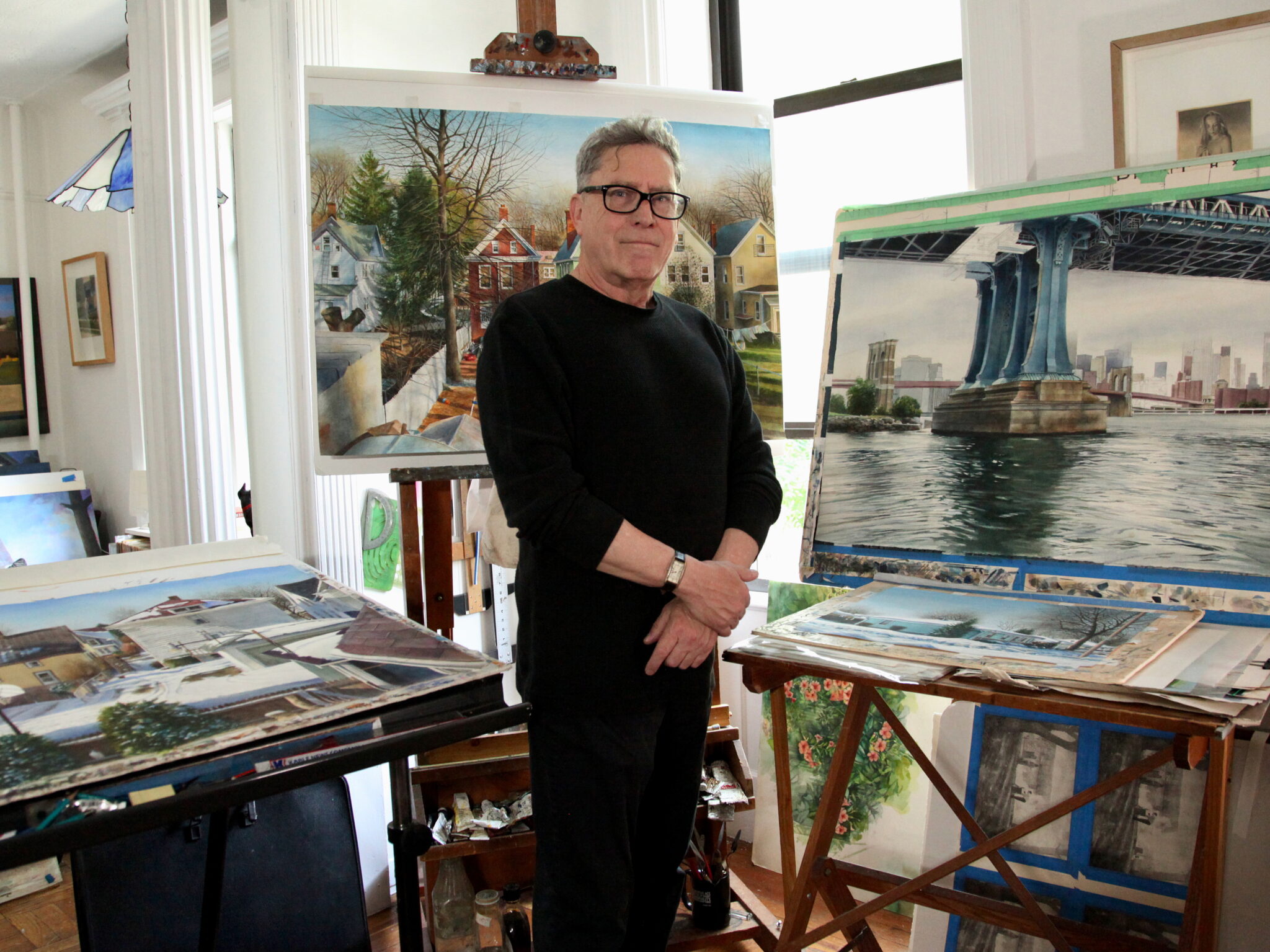
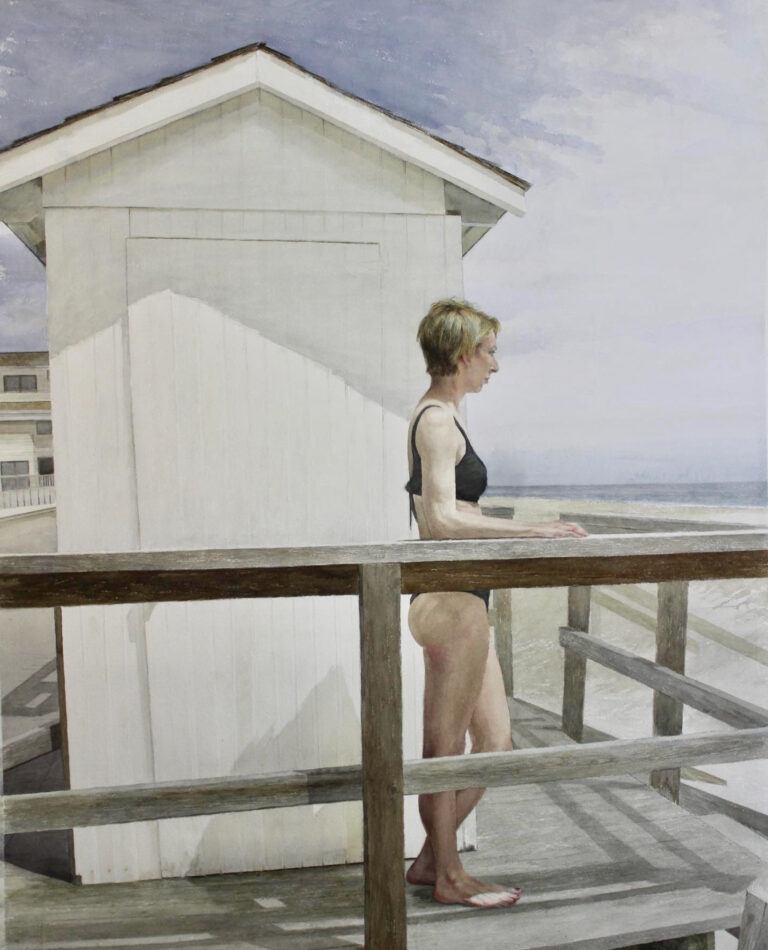
My favorite artists are Andrew Wyeth, Winslow Homer, and the contemporary watercolorist Stephen Scott Young. These artists work within the American Tradition of painting.
Who is your favorite artist whose work is unlike your own?
My favorite contemporary artist is Chuck Close. His later work uses elements of abstraction, which results in a frenetic sense of realism.
Art book you cannot live without?
The Helga Pictures: Andrew Wyeth (1987).
What is the quality you most admire in an artist?
Integrity.
Do you keep a sketchbook?
I don’t keep a sketchbook. I used compositional studies in my early days to make informed decisions about my finished works. In recent years, I have found that preserving my energy for a singular purpose allows me to fully execute on my original idea.
What’s your favorite museum in the world?
The Brandywine Museum of Art (Chadds Ford, PA).
What’s the best exhibition you have ever attended?
The best exhibition I ever attended was A View from the Bahamas: Watercolors by Stephen Scott Young at the NSU Art Museum (Fort Lauderdale, FL), 2004.
If you were not an artist, what would you be?
If I weren’t an artist, there’s a strong possibility I would’ve served more years in the military and pursued a civil service career.
Did you have an artistic cohort that influenced your early creative development?
I would have to credit my high school art teacher, Mrs. Louise Elvinger, for my early creative development. She offered me the opportunity to participate in a “talented and gifted” program while I was in the sixth grade. During this period, I began to develop as an artist and focused more intently on my craft.
What is one thing you didn’t learn in art school that you wish you had?
I believe I share a popular sentiment among artists: the importance of possessing a basic understanding of business. While art schools are tasked with developing a student’s knowledge of art history, technical skills, and other aspects, there’s a lack of focus on the next level.
What work of art have you looked at most and why?
I have a reproduction of Master Bedroom by Andrew Wyeth, which hangs outside the door of my home studio. The watercolor is significant, as it’s the first image I ever saw by Andy. The framed print hung outside the Department Chair’s office during my time at Pratt Institute in the early 1990s. I was awestruck by the way he used the white surface of the paper to capture light in the room. I felt that the aesthetic of watercolor would appeal to me more than the medium of oil, which I was studying at the time.
What is your secret visual pleasure outside of art?
I am fascinated by timepieces, whether it’s their aesthetic beauty or the precision of the movement.
Do you listen to music in your studio?
Yes, I generally have a broad range of musical styles playing in my studio, based on my mood.
What is the last gallery you visited?
The last gallery I visited was Pierce Galleries on Nantucket. I was interested in entering into a business relationship with the gallery and wanted to get a feel for the dealer and the work he offered.
Who is an underrated artist people should be looking at?
What art materials can you not live without?
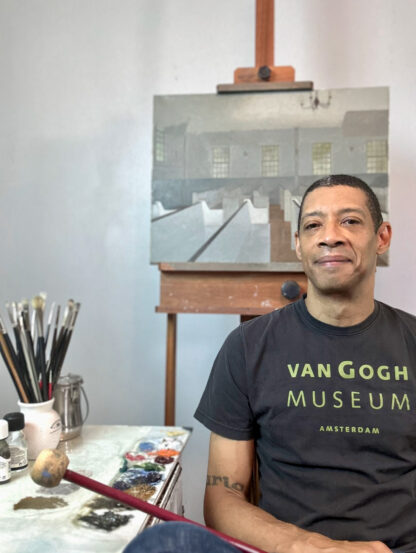
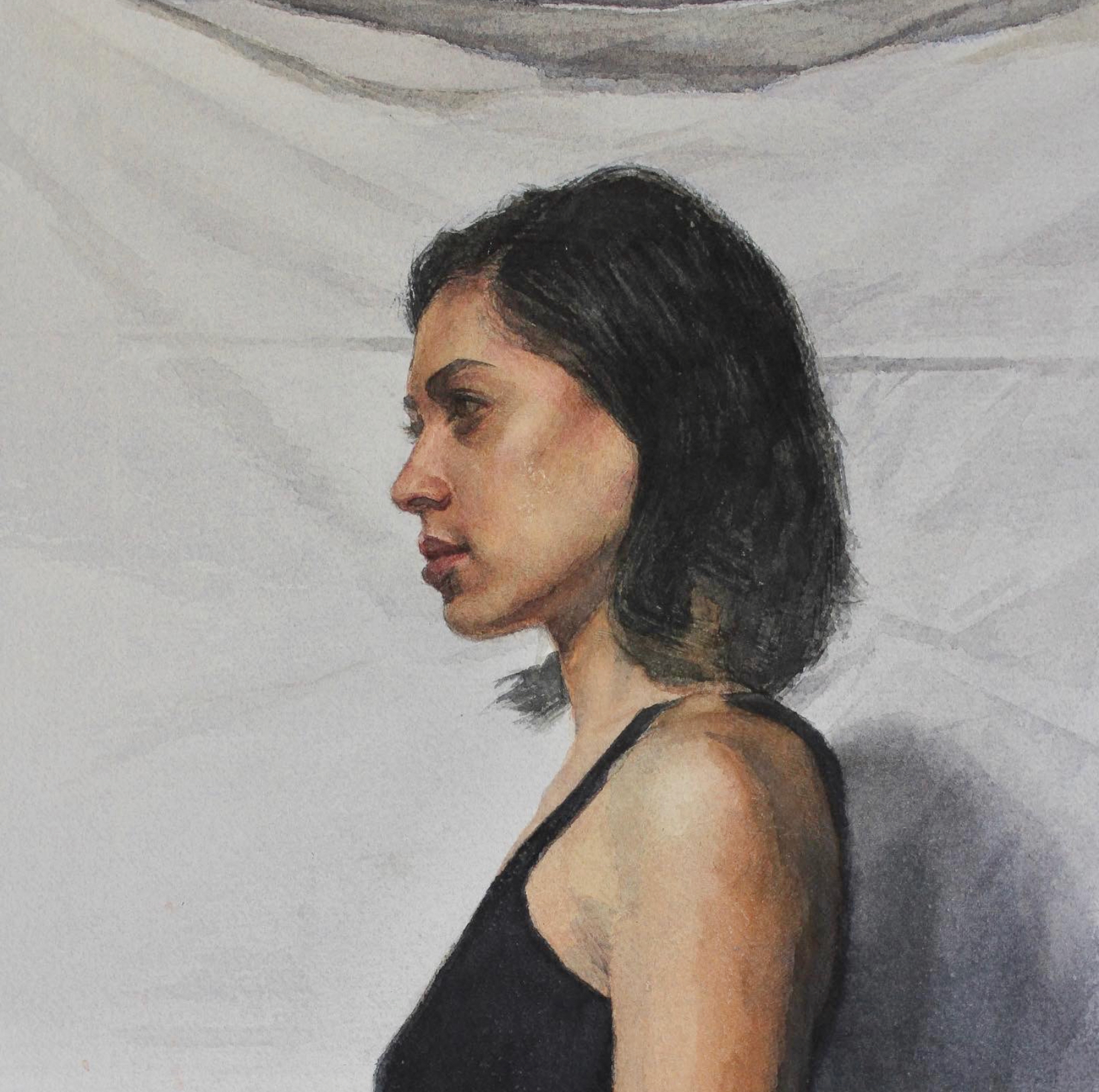
My Winsor & Newton Series 7, size 7 sable brush is invaluable to my practice. The versatility of the brush is impressive, from covering large areas with watercolor washes to minute details with a pointy tip. My synthetic mixing brush has gone through the wringer; however, it’s nice to have materials on which you can rely.
Do you paint art every day?
I work eight hours each day, seven days a week.
What is the longest time you went without creating art?
My mother suffered an aneurysm in 2009, which caused her to need surgery and rehabilitation. I felt that it was necessary for her to live with me during the first four months of her recovery. I was focused on her health and the day-to-day care. I hadn’t planned to put my studio practice on hold for four months; however, that’s what was required.
What do you do when you are feeling uninspired?
If I’m feeling uninspired, I won’t force the issue. I take that time to step back from art-related activities. I like to take walks, catch up on e-mails, or basically anything I avoid due to my painting schedule.
What are the questions that drive your work?
What unifies us as people? How do I celebrate the spirit of America in all its complexity? What’s the most effective way to shine light on subjects that have largely been ignored throughout the history of art?
What is the most important quality in an artist?
A relentless work ethic.
What is something you haven’t yet achieved in art?
I’m looking forward to my first solo exhibition at a major museum. I’ve participated in several group shows; however, a solo show offers a more expansive experience with the work.
What is the best thing about art in the era of social media?
Social media has offered the public the opportunity to view art from around the world, virtually in real time. There is also an unprecedented amount of information being shared by organizations.
MARIO ANDRES ROBINSON (marioarobinson.com | @marioarobinson) will be teaching, Painting the Portrait in Watercolor, March 9–13, 2026, a workshop at the Art Students League of New York.
Selection of stories, guides, and more from the League.
.svg)
.svg)

.svg)